Follow the progress of the Minnesota Council on Disability’s (MCD) legislative initiatives at the State Capitol through updates from Public Policy Director Trevor Turner.
If you have public policy questions, contact Trevor Turner at Trevor.Turner@state.mn.us or 651-350-8642.
On this page:
June 12, 2024
Message from Council Chair Nikki Villavicencio
The Minnesota Legislature has always been a place of hustle and bustle – and a lot of debate about bills. To many people, it can feel like a lot of noise. But as the Chair of the Council, I believe that the effect of the Legislature’s actions on people with disabilities matters the most. Not the noise.
This year was a policy year, so our desires for transformative change were limited. However, work was still being done! As one of the largest minority groups, educating policymakers and leaders about disability issues is a never-ending process.
Speaking of noise, almost everyone has heard about the Uber and Lyft issue. It seemed like the drama would never end. Many people’s lives were potentially affected, and the local economy, too. MCD’s position is always to encourage the government to include people with disabilities at the table and to ensure they are treated equitably. I am hopeful that the new wheelchair-accessible vehicle incentives will be a step in that direction.
Parking is an issue that will affect my everyday life. Eliminating the word “handicap” from our disability parking signs statewide is long overdue! Words matter because they are directly connected to how we treat people.
As with any Legislative Session, there are things that we want to continue to change. We can be hopeful that we are on the path to creating a more equitable Minnesota!
Message from Executive Director David Dively
We appreciate the invaluable contributions of our community partners, self-advocates, and legislators who collaborated with us this year. Your commitment to disability advocacy was instrumental to our success. We also thank our Council members for their leadership and our staff for their unwavering commitment to this work.
2024 MCD Legislative Overview
The 2024 Minnesota Legislative Session has officially ended, and despite a contentious finish, numerous bills aimed at improving the lives of Minnesotans with disabilities have passed into law.
This session was a “policy year,” focusing on legislative changes rather than large spending bills. Legislators preferred to reserve the surplus budget announced in February to cover unforeseen costs from the 2023 legislative session. As a result, MCD focused on advocating for policy changes with limited costs while laying the groundwork for future legislation involving more substantial funding.
Next year, the 2025 legislative session will focus on budgets for state agencies, grants, and programs, presenting better opportunities to pass disability legislation with larger financial implications.
Note: Some of these bills were combined into an omnibus (HF 5247). The following provisions refer to the original omnibus bills passed out of their respective conference committees.
This overview covers many significant policy changes, but it is not exhaustive.
MCD Legislative Priorities Passed This Session
Accessible Transportation Network Companies
Wheelchair Accessible Vehicle Pay Increases: Drivers of Wheelchair Accessible Vehicles (WAVs) will receive an additional $0.91 per mile on top of the minimum rate established, aiming to improve service equity for wheelchair users. (HF 5242, Article 17, Section 4)
Task Force on Guardianship
Established Task Force: A task force led by MCD will investigate the impact of guardianships and conservatorships on Minnesotans with disabilities, exploring alternatives like Supported Decision-Making. (SF 5335, Article 1, Section 39)
Guardianship Immunity Elimination
Accountability for Guardians: The elimination of blanket immunity for guardians who abuse those under their care, leading to more legal options for enforcing the rights of Minnesotans with disabilities. (HF 5216, Article 15, Section 10)
Minnesota RISE Act
Disability Rights in Higher Education: The Minnesota Respond, Innovate, Succeed, and Empower (RISE) Act ensures students with disabilities know their rights and are aware of available services and accommodations. It aligns state law with the ADA, improves the interactive process for accommodations, and expands acceptable documentation of disabilities. (HF 4024, Article 2, Section 9)
MHRA Amendment for Episodic Disabilities
Episodic Disabilities Protection: This amendment clarifies that episodic disabilities are covered under the Minnesota Human Rights Act (MHRA), ensuring workplace rights for employees with episodic conditions like chronic pain and epilepsy. (HF 4109, Section 2)
Service Animal Clarification
Broadened Definition: The definition of service animals is expanded to include those that detect seizures or assist with PTSD (Post-traumatic stress disorder), ensuring their right to serve people with disabilities in public spaces. (HF 4109, Section 10)
Disability Parking Standardization
Standardized Signs: By August 1, 2024, MCD will propose a statewide uniform disability parking space sign, phasing out the term “handicap.” This bill also aims to educate the public on disability parking policies. (HF 5242, Article 3, Section 59)
MCD Policy Priorities Not Passed by the Legislature
Sunset Date for Subminimum Wage
Many programs and policies were passed in 2023 to help phase out subminimum wage, the legislature could not come to a firm legal end date for its use. We will continue to advocate for the elimination of subminimum wages for Minnesotans with disabilities.
Minnesota Equal Rights Amendment
The Minnesota Equal Rights Amendment did not pass this session. This amendment to the state constitution aimed to enshrine civil rights protections for marginalized groups, including those with disabilities. Controversies over gender identity and abortion rights surrounded it. We expect the amendment will be reintroduced in the 2025 session and, if passed, will be on the ballot in the 2026 election.
Eliminating Premiums for MA-EPD
The bill to eliminate premiums for Minnesotans utilizing Medical Assistance for Employed Persons with Disabilities (MA-EPD) failed because of fiscal concerns. MCD will continue to push for this change and work with the Department of Human Services to reassess its fiscal impact.
Capitol Area Tunnel Renovations
A bonding bill that included investments in infrastructure, such as accessibility renovations for the Capitol Area tunnel, did not pass. Narrow party majorities and a lack of bipartisan support kept it from passing. MCD will continue to advocate for these essential access improvements.
Other Notable Disability-related Bills Passed This Session
Transportation
- Transportation Study: A study on dynamic transportation options and a Greater Minnesota Transit plan with MCD as a stakeholder. (HF 5242, Article 3, Section 124)
- Metro Mobility Enhancements Study: A study on enhancements for Metro Mobility, consulting various disability organizations, including MCD. (HF 5242, Article 3, Section 125)
Housing
Service Animal Exceptions: Landlords must disclose the prohibition on additional fees for service or support animals in leases. (SF 3492, Section 6)
K-12 Education
- Minimum Classroom Instruction: Standardized instructional hours for all students, including those with disabilities. (HF 5237, Article 1, Sections 1 & 6)
- Special Education Grants: Grants to address shortages in the special education workforce. (HF 5237, Article 5, Sections 19 & 23)
- Disability Justice and Ableism Instruction: Encourages schools and teacher preparation programs to include instruction on ableism and disability justice, taught by experts with disabilities. (SF 3567, Article 3, Sections 3 & 16)
- Special Education Licensure: Improvements to special education application approvals and the creation of a licensure reciprocity working group. (SF 3567, Article 3, Sections 5 &7 and Article 5, Section 5)
Human Rights
- Child Adoption and Custody: Ensures disabilities do not prevent prospective parents from adopting or restrict parental custody. (HF 5237, Article 18, Sections 25 & 47)
- Child Protective Services: Prohibits petitions alleging a child needs protection or services based on a parent’s disability. (HF 5237, Article 18, Section 32)
- Apprenticeship Opportunities: Clarifies that apprenticeship programs must be open to people with disabilities. (SF 3852, Article 4, Section 2)
- Apprenticeship Rights: Clarifies that apprenticeship policies cannot override special provisions for people with disabilities. (SF 3852, Article 4, Section 24)
- Bankruptcy Protections: Increases value limits for vehicles modified for disabilities, protecting them from bankruptcy proceedings. (SF 4097, Article 3, Section 89)
Health & Human Services
- MA-EPD Improvements: Updates to the Medical Assistance for Employed Persons with Disabilities program to lengthen the time between income verification. (SF 4399, Article 1, Section 11)
- PCAs in Hospitals: Direct care support staff can continue to work with a client when that client is in the hospital. (SF 5335, Article 1, Section 30)
- Relatives as PCAs: Allows parents, stepparents, legal guardians, and spouses to be paid for providing personal care assistance services under Medical Assistance. (SF 5335, Article 1, Section 45)
- Prosthetics: Medicaid and Medicare are required to cover prosthetic and orthotic devices. (SF 4699, Article 4, Sections 23 & 24)
- Accessible Prescription Bottles: Pharmacies must inform patients about the availability of accessible prescription drug containers. (SF 4699, Article 8, Section 11)
- RDAC Funding: The Rare Disease Advisory Council (RDAC) receives a one-time fund of $342,000 in fiscal year 2025. (SF 4699, Article 21, Section 5)
- New Departments: Transfers services from the Department of Human Services to the newly created Department of Direct Care & Treatment and the Department of Children Youth & Families to improve services. (HF 3987, HF 3646)
Call to Action
We need your input as the MCD Public Policy team moves from the 2024 legislative session to the 2025 session. Follow MCD to learn about the various opportunities to contribute to and suggest policies for the 2025 MCD Legislative Agenda. Your ideas and insights drive our progress. For more information, visit our Public Policy pages.
May 20, 2024
Final Status of MCD Legislative Priorities
The 2024 Minnesota Legislative Session has officially ended. Even though many bills did not make it through the contentious final hours of session, we managed to get several MCD legislative agenda items passed into law.
- Wheelchair Accessible Vehicles (WAV) pay incentives for Transportation Network Company (TNC) drivers (HF 4746 Section 4 Line a.2)
- Task Force on Guardianship Reform (SF 5335 Article 1 Section 39)
- Guardianship Immunity Elimination (HF 5216 Article 15 Section 10)
- MN Respond, Innovate, Succeed, and Empower (RISE) Act for disability rights in Higher Education (HF 4024 Article 2 Section 9)
- MN Human Rights Act inclusion of episodic disabilities amendment (HF 4109 Section 2)
- Clarification that service animals can be used for any disability (HF 4109 Section 10)
This is not a complete list of disability-related laws passed this year. Come back at the end of the week for a full review of all the laws benefiting people with disabilities passed in the 2024 legislative session.
April 18, 2024
As we approach the crucial deadline of April 19, the Minnesota Legislature is very busy debating and refining important bills. This week marks the cutoff for bills with fiscal notes to be heard in their respective committees in both the House and the Senate. Bills that have any costs to the state must clear this hurdle to stay viable for final passed in the remaining weeks of the 2024 Legislative Session.
Post-deadline week, the legislative focus will shift to the final passage of finance and policy omnibus bills in both chambers. Omnibus bills are a compilation of the many bills that were heard and passed out of committee throughout session. The next significant phase involves conference committees, where differences in the policy and finance omnibus bills will be reconciled to produce a final conference committee report. This report must pass out of both the House and Senate for final enactment into law before the session concludes in May.
Transportation Network Companies Update
The Senate Transportation Network Companies (TNC) compromise bill (SF 4780) currently includes Wheelchair Accessible Vehicle (WAV) pay incentives for drivers. Next week, an amendment aimed at strengthening these provisions is expected to be introduced. Although the House version is similar, specifics on rates are pending. A consensus on the Senate’s terms by the two largest TNC companies, Uber, and Lyft, could see the House accepting the Senate rates. However, plans for a study or grant program for Wheelchair Accessible Vehicles have stalled this year, with transportation committees in both chambers opting out of including any bills or provisions with fiscal notes in their final omnibus bills.
Legislative Taskforce on Guardianship
Attention is also directed towards the guardianship measures. The Senate Human Services Omnibus (SF 5335), which includes these provisions, is set to be discussed in the Senate Human Services Committee. Its counterpart in the House (HF 5280) has yet to incorporate these measures.
ADA Grants for State Property in Minnesota
Efforts to secure funding for accessibility improvements on state-owned properties are gaining traction. The proposal is being reviewed today by the House Capital Investment Committee (HF 5203), though it currently lacks a Senate companion, which means it will likely be negotiated in the Capital Investments conference committee.
Sunset Date for Subminimum Wage
The initiative to phase out the 14c subminimum wage certificates faces significant challenges in both the Senate and House. It is unlikely to pass the Senate at all in its current form and in the House, it faces skepticism by house members. The removal of subminimum wage is in the House Human Services Omnibus bill (HF 4392), but it is not in the Senate’s version (SF 4399). We will work to preserve the House’s version of the bill and end subminimum wage.
Minnesota RISE Act
Included in both the House and Senate Higher Education Policy Omnibuses (HF 4024 & SF 4003) with minimal differences, the MN RISE Act will be reconciled for resolution in the Higher Education conference committee later this month.
Disability Human Rights Legislation
The amendments concerning episodic disabilities and service animal clarifications have been included in the Minnesota Human Rights Policy Omnibus bills for both the House and Senate. Their inclusion in the final omnibus bill conference report is extremely likely.
Other Bills and Initiatives
Other priority bills and initiatives from the Minnesota Council on Disability will not advance this session but will be revisited in the 2025 Legislative Session, which is considered a budget year and easier to pass bills with fiscal notes.
March 29, 2024
On Thursday, March 21st, MCD Public Policy Director Trevor Turner gave a legislative update to MCD Council Members about the 2024 Legislative Session.
March 22nd was a legislative deadline. Policy bills needed to be heard in the House and the Senate before being considered for final passage into law. The deadline resulted in packed committee schedules and extensive hearings. Despite expectations of a quieter policy-only year, the 2023-2024 biennium saw a record number of bills introduced.
The legislature will now consider bonding and other bills that appropriate one-time spending. Last month, the Office of Management and Budget released its budget projection for the state. They estimate Minnesota has about a $3.7 billion surplus. Legislative leadership is hesitant to spend all the surplus. They are concerned there may not be enough money to cover possible structural deficits from money appropriated during the 2023 legislative session. However, the leadership will almost certainly pass a bonding bill containing one-time appropriations for infrastructure and capital investment projects around the state.
Update on Legislative Priorities
Here is an update on some of our legislative priorities.
Guardianship Reform
SF 3438 / HF 3483: Our efforts to reform guardianship laws include:
- Eliminating immunity for guardians to ensure accountability
- Establishing a Task Force on Guardianship Reform
The bills were heard in their relevant committees and will meet the committee deadline. The proposed legislation will likely be included in the Judiciary Omnibus bill. However, the omnibus might only contain provisions for eliminating blanket immunity for guardians. A separate bill will include the task force language to ensure that task force is properly funded.
Minnesota RISE Act
SF 4525 / HF 4565: This act proposes comprehensive support and accommodations within higher education institutions for students with disabilities. It was well received in committee discussions and is moving forward in the legislative process. The support shows a strong commitment to equal academic opportunities for all students. The MN RISE Act is included in the higher education policy omnibus bill SF 4003 / HF 4024.
Minnesota Human Rights Amendment for Episodic Disabilities
SF 4292 / HF 4021: This amendment to the Minnesota Human Rights Act would align state protections for episodic disabilities with federal standards. Episodic disabilities are those that come and go, such as recurring cancer, epilepsy, diabetes, and psychiatric disorders. This amendment is progressing through the legislature and is included in the Human Rights Department policy omnibus bill.
Service Animal Clarification
SF 4292 / HF 4021: This proposed amendment to the Minnesota Human Rights Act clarifies the definition of a service animal to include more disabilities and types of animals. The updated language is included in the Human Rights Department policy omnibus bill.
MA-EPD Premium Elimination
SF 3648 / HF 3419: Eliminating premiums for Medical Assistance for Employed People with Disabilities (MA-EPD) would provide some financial relief for program participants. However, eliminating premiums this session would be challenging. SF 3648 / HF 3419 is a short-term solution: people on MA-EPD could not be removed from the program if they cannot pay their premiums. A long-term solution to costly premiums is being considered for the 2025 legislative session.
Sunset Date for Sub-minimum Wage
SF 4392 / HF 4206: The push to end sub-minimum wage practices is part of a broader labor rights movement by people with disabilities. These provisions aim to ensure fair wages and equal opportunities by setting an end date for sub-minimum wages. The provisions are included in the Governor’s policy bill and have support in the House. However, they face strong opposition in the Senate. They will likely be a part of negotiations during conference committee towards the end of the session.
Accessible Transportation Companies
SF 4780 / HF 4746: We are advocating for transportation network companies (TNC) like Uber and Lyft to have more accessible vehicles in service. However, this session, the push for accessible transportation companies is tied up in the dispute over higher wages. When the City of Minneapolis passed an ordinance requiring higher pay for TNC drivers, Uber and Lyft threatened to end service in the Twin Cities metro area and perhaps the entire state. The legislature responded with a bill that would increase pay minimums for TNC drivers statewide. That bill includes provisions for a minimum number of wheelchair-accessible vehicles and incentives for drivers to make their vehicles wheelchair accessible. Considering the disputes surrounding this bill, we cannot say it will pass.
Tunnel Improvement System
HF 4371: House File 4371 proposes funding to build a more accessible tunnel between the Capitol Building and the State Office Building. The current tunnel doesn’t comply with the Americans with Disabilities Act (ADA); it is too steep for people with mobility impairments, including manual wheelchair users, to use.
Testifying in support of the bill, MCD’s Public Policy Director Trevor Turner emphasized the Capitol’s function as a public space. The ADA covers access to public spaces and government services. Building a more accessible tunnel, Turner noted, would make the Capitol complex more inclusive and encourage people with disabilities to participate in their government. Watch Trevor’s testimony (video).
Former State Representative Rod Hamilton (Worthington, MN) also testified in support of HF 4371. Hamilton, who transitioned from walking to using a wheelchair, recounted the difficulties he had navigating the Capitol complex, including the tunnel. His testimony underscored the current tunnel’s real-world impact on people with disabilities.
Turner’s and Hamilton’s testimonies highlight the critical need for House File 4371. They present a strong case for making the Capitol tunnel more accessible. It isn’t just a matter of compliance but a way to make government and the democratic process more inclusive.
Our legislative priorities are not the only disability-related policies being considered this session. As bills move into conference committee at the end of April and the beginning of May, we will look more closely at the ones likely pass this session.
March 15, 2024
The Minnesota Legislature has been busy this past week. It will continue to be busy as legislators and advocates push to have their bills heard before the legislative deadline, March 22. This is when all policy bills must be heard in their relevant committees in both the House and the Senate to be considered for final passage into law.
Each legislative session, MCD works with partner advocates to improve the lives of people with disabilities in Minnesota. This update covers proposals to:
- Streamline the Medical Assistance for Employed Persons with Disabilities (MA-EPD) program and reduce bureaucratic hurdles.
- Establish a sunset date for subminimum wages to ensure fair pay.
- Improve accessibility in higher education through the Minnesota RISE Act, lowering dropout rates among students with disabilities.
These bills reflect our commitment to:
- Promoting equity, dignity, and opportunity.
- Encouraging community engagement.
- Gaining support to advance these legislative efforts.
Medical Assistance for Employed Persons with Disabilities
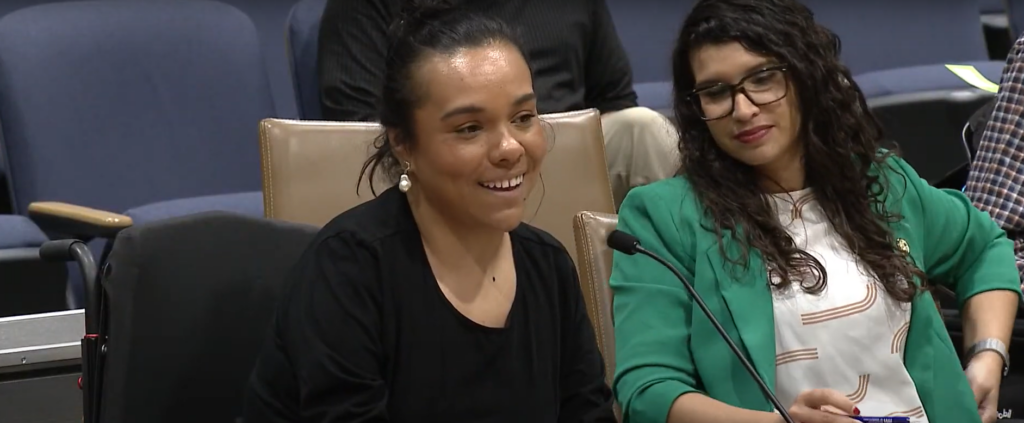
SF 4197 proposes two changes to the Medical Assistance for Employed Persons with Disabilities (MA-EPD) program:
- Extending the premium renewal period from six months to 12 months.
- Extending the reporting period for changes in income or household size from 10 days to 30 days.
The Human Services Committee heard testimony detailing the challenges of the current system. On Wednesday, March 13, former MCD employee Brittanie Hernandez-Wilson explained that while MA-EPD has enabled her to work and earn competitive wages for nearly 15 years, the renewal process is difficult and burdensome. Every six months, she must reapply and confirm several pieces of financial information, including assets, bank accounts, and retirement plans. Brittanie recounted the stressful experience of being notified that her healthcare would not be renewed because of missing paperwork. She encouraged legislators to support SF 4197 and simplify the renewal process.
Subminimum Wage
The Department of Human Services’ proposal, SF 4399, included a requirement to phase out the use of subminimum wage and minimum wage for people with disabilities, including the end of new subminimum wage users after August 1, 2026, and a complete end for that program on August 1, 2028. The bill also includes measures to ensure that people with disabilities in certain employment programs are paid at least minimum wage.
Senator Utke proposed an amendment to delete sections of the bill that related to reducing or ending the use of 14c certificates in Minnesota. Senator Hoffman, who Chairs the committee, expressed support for this amendment, emphasizing the need for a plan to transition away from subminimum wages.
The Minnesota Council on Disability supports the phaseout timeline that was included in the original bill.
Minnesota RISE Act
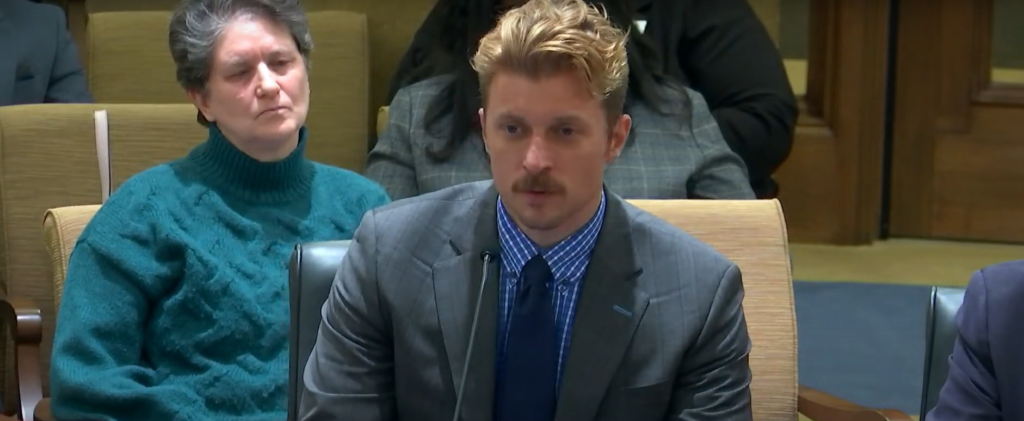
Trevor Turner, Public Policy Director, testified on Thursday, March 14, to show MCD’s strong support for SF 4525. The Minnesota Rise Act – Minnesota Respond, Innovate, Succeed, and Empower – introduced by Senator Fateh, would simplify the process for obtaining accommodations in college. In his testimony, Trevor highlighted the challenges many students face when trying to request accommodations. He cited it as a leading reason students with disabilities drop out of higher education.
Trevor noted that the MN RISE Act aligns with current disability rights laws, addresses a clear need, and is driven by student input. He encouraged committee members to support the act, emphasizing that it would lead to greater educational and vocational success.
Letters of Support
MCD supplemented our testimonies for SF 4399 and SF 4525 with letters of support.
In the letter supporting SF 4399, Public Policy Director Trevor Turner detailed ways the RISE Act supports students with disabilities. The act would:
- Expanding the criteria for accepted disability documentation.
- Require colleges to establish transparent policies regarding disability services.
His letter supporting SF 4399 argues that paying subminimum wages perpetuates economic disparities and undervalues the contributions of workers with disabilities. It also urges the committee to support the provisions phasing out subminimum wages as a step towards a more inclusive Minnesota.
News Updates
Senator Kelly Moller mentioned MCD in her legislative update. We were included among several organizations that support her bill that would make spouse and family caregivers “eligible to participate in the state-run retirement program, Secure Choice,” and save for the future.
Bill Tracker
Each session, lawmakers introduce dozens of bills that will impact the disability community. Some bills aim to improve the lives of Minnesotans with disabilities. Others contain policies that could negatively affect them. The amount of legislation introduced during session makes it a daunting task to follow the ones you might be interested in. We compile a list of disability-related bills to make it easier for you to stay informed.
Stay Connected
You can follow us on Facebook, visit our website’s public policy page, and sign up for our newsletter for regular updates.
Contact Information
If you have questions or comments about our public policy work, please contact Public Policy Director Trevor Turner at trevor.turner@state.mn.us or 651-350-8642.
February 29, 2024
On Monday, February 19, MCD Public Policy Director Trevor Turner testified at the Human Services Finance committee on the Medical Assistance for Employed People with Disabilities (MA-EPD) bill HF 3419, which is one of MCD’s 2024 public policy priorities. MA-EPD is a program that people can use if they want to work and need to continue receiving Medical Assistance for health care.
The bill prevents people from getting removed from the MA-EPD program due to the inability to pay costly monthly premiums. Folks will still need to pay their premiums, but they won’t lose health care if a month or two of premiums are missed. Currently, folks are removed from the program and lose health care benefits for missing a couple of payments.
Representative Kim Hicks introduced HF 3445, that proposes the Department of Human Services perform a continuous improvement study of access to disability services.
There was a hearing on the Guardian Task Force by the Department of Human Services Policy committee that seeks to eliminate blanket immunity for guardians. HF 3483 aims to reinstate fundamental rights for individuals under guardianship. Trevor Turner testified to MCD’s support of the bill. The Guardian Task Force bill is authored by Representative Feist.
This session focuses on educating as many people as possible and raising awareness on issues while laying the groundwork for success next year. Follow our bill tracker for details on bills introduced this session.